
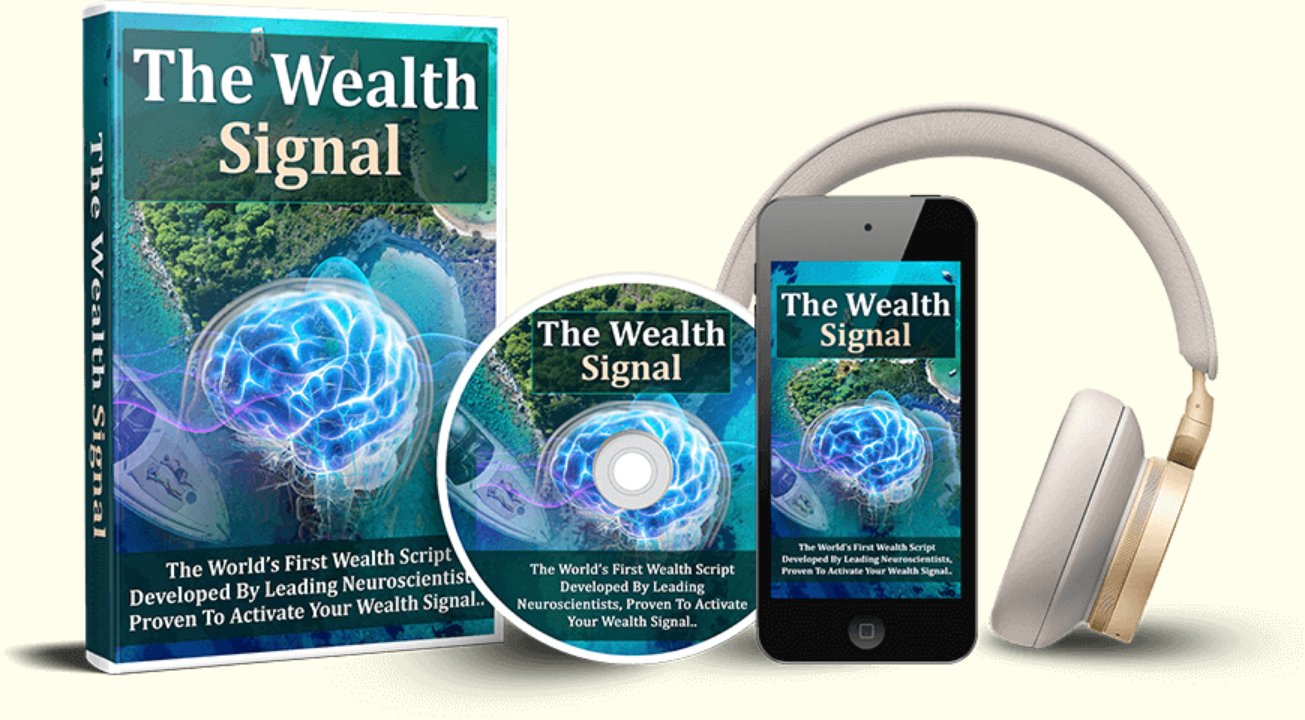
Introduction: Why Money Thinking Has Become the Real Battleground
In today’s fast-moving world, money is no longer just about income, jobs, or investments. For many people, the real struggle happens much earlier—inside the mind. Thoughts about scarcity, fear of not having enough, or constant financial stress quietly shape decisions long before any practical action is taken. This is exactly where programs like The Wealth Signal position themselves.
The concept behind How The Wealth Signal Tries to Rewire the Way You Think About Money is built on a simple but powerful idea: if your internal mindset changes, your external financial behavior may also begin to shift. Instead of focusing only on budgeting or earning strategies, it attempts to influence how a person feels and thinks about wealth at a subconscious level.
Unlike traditional financial education tools, this program blends audio-based techniques, affirmations, and what it calls a “9-word wealth script” to create a structured mental routine. Whether someone believes in manifestation or approaches it with curiosity, the growing interest in such tools reflects one thing clearly—people are searching for ways to improve not just their income, but their relationship with money itself.
Understanding The Wealth Signal and Its Core Idea
At its core, This is a digital mindset program designed around audio sessions that users listen to daily. The creators describe it as a system that helps align the subconscious mind with ideas of abundance, confidence, and financial clarity.
The central claim is not about directly generating money, but about influencing thought patterns. According to the program’s philosophy, many financial limitations come from deeply rooted mental beliefs. These beliefs often operate automatically, shaping how people respond to opportunities, risks, and financial decisions.
This is where This Signal tries to rewire the way you think about money by repeatedly exposing the mind to specific sound frequencies and structured affirmations. Over time, the idea is that these inputs may encourage more positive financial thinking patterns.
The system also introduces a short “wealth script,” which users are encouraged to repeat during listening sessions. This repetition is meant to act as a mental anchor, reinforcing the theme of abundance rather than scarcity.
The Mindset Shift Behind Money and Subconscious Programming
One of the most interesting aspects of The Wealth Signal is its focus on subconscious reprogramming. In psychology, the subconscious mind is often described as the part of the brain that stores habits, emotional reactions, and long-standing beliefs. While not always visible, it heavily influences day-to-day behavior.
The program builds its foundation on the idea that if someone constantly thinks “money is hard to earn” or “I never have enough,” those beliefs may influence their decisions without them realizing it. This could lead to hesitation in career opportunities, lack of confidence in negotiations, or fear-driven financial choices.
By contrast, This Signal attempts to introduce a different mental pattern—one centered around possibility, openness, and abundance thinking. Through repeated exposure to audio sessions, it aims to gradually shift attention away from fear-based thinking and toward more confident financial perspectives.
This approach is not presented as instant transformation. Instead, it is framed as a gradual process of mental conditioning, where repetition plays a central role.
How This Signal Tries to Rewire the Way You Think About Money in Practice
To understand how the system works in real use, it helps to break down the experience from a user perspective. Typically, a session involves listening to specially designed audio tracks that include layered sound frequencies and spoken affirmations.

These audio patterns are intended to guide the brain into relaxed mental states often associated with focus and creativity. In such states, people are generally more open to suggestions and reflective thinking. The program uses this window of mental relaxation to introduce positive financial statements and the 9-word script.
The repetition of these elements is central. Rather than overwhelming the mind with complex instructions, the system focuses on simplicity. A user listens, repeats, and allows the experience to become part of their routine.
Over time, supporters of the concept believe this repetition helps reduce mental resistance to positive financial thinking. Whether one views this as psychological conditioning or motivational reinforcement, the goal remains the same: reshape how money is perceived internally.
The Role of Brainwave Audio and Mental States
A major selling point of The Wealth Signal is its use of audio frequencies that are said to interact with brainwave states. The program references states such as alpha and theta, which are commonly associated with relaxation, daydreaming, and light meditation.
In simple terms, these states occur when the mind is calm but still aware. Many meditation practices aim to reach similar conditions because they are often linked with reduced stress and improved focus.
This Wealth Signal uses this concept to support its main message. The idea is that when the brain is in a more relaxed state, it may become less resistant to new ideas. In this context, financial affirmations and abundance-focused thoughts may feel more natural to the listener.
While scientific interpretations of brainwave entrainment are still debated, many users report that the experience feels calming and helps them step away from financial anxiety, even if temporarily.
The 9-Word Wealth Script and Its Psychological Purpose
One of the most distinctive elements of the program is the so-called 9-word wealth script. This short phrase is designed to be repeated during sessions and is positioned as a symbolic anchor for abundance thinking.
The simplicity of the script is intentional. Instead of complex affirmations or long motivational statements, a short phrase is easier for the mind to remember and repeat consistently. This repetition is where the psychological effect is expected to build over time.
From a behavioral perspective, repetition can reinforce focus. When a thought is repeated often enough, it becomes more familiar, and familiarity can sometimes reduce mental resistance. In the context of Wealth Signal, this is used to encourage a steady shift in attention toward financial confidence and opportunity awareness.
Real User Experiences and Reported Outcomes
Many discussions around Wealth Signal include personal experiences from users who claim to notice shifts in their mindset and emotional relationship with money. These experiences often describe reduced financial stress, improved confidence, or a more optimistic outlook on opportunities.
Some users report external changes such as unexpected income, job improvements, or new business leads. However, it is important to understand that these outcomes are subjective and cannot be universally guaranteed. In many cases, changes in mindset alone can influence behavior, which may indirectly affect financial outcomes.
For example, someone who feels more confident may take more initiative at work or approach clients more effectively. In such cases, the program acts more as a motivational or psychological support tool rather than a direct income generator.
What stands out in most testimonials is not just financial change, but emotional relief. Many users describe feeling less anxious about money, which can itself be a significant shift in quality of life.
Features That Define The Wealth Signal Experience
The structure of This is built around simplicity and repetition. The audio sessions are designed to be short and easy to fit into daily routines, making it accessible even for busy individuals.
The digital format means users can access the program from anywhere, without needing physical materials or complex setups. This convenience plays a big role in how consistently users engage with it.
Another defining feature is its focus on emotional alignment. Instead of presenting financial strategies or investment advice, it centers on internal belief systems. This makes it different from traditional financial education tools, as it focuses more on mindset than mechanics.
The combination of audio, repetition, and scripted affirmations creates a structured daily practice that is easy to maintain, which is often a key factor in any habit-forming system.
Pricing, Access, and Refund Policy Considerations
This is typically positioned as a one-time digital purchase rather than a subscription-based service. This model appeals to users who prefer avoiding recurring charges.
The program also includes a refund policy that allows users to request their money back within a specified period if they feel it does not meet their expectations. This reduces the perceived risk of trying the system and encourages users to explore it without long-term commitment pressure.
From a value perspective, supporters argue that even small mindset improvements can justify the cost, while skeptics may view it as just another digital self-help product. As with most mindset-based programs, perceived value often depends on individual experience rather than measurable guarantees.
Who Might Find This Relevant
This Wealth Signal is generally aimed at individuals who feel stuck in their financial mindset rather than those looking for technical financial instruction. It appeals to people who believe their thinking patterns influence their money outcomes.
This includes professionals who feel blocked in career growth, entrepreneurs seeking more confidence in decision-making, or individuals experiencing financial anxiety who want a calmer relationship with money.
It may also attract those interested in meditation, sound therapy, or subconscious mind practices. However, it is not designed as a replacement for financial planning, budgeting, or investment education.
Instead, it positions itself as a complementary mindset tool that supports emotional and psychological readiness for financial improvement.
The Broader Question: Can Mindset Really Influence Money?
The most important question surrounding The Wealth Signal is not about the audio itself, but about the role of mindset in financial life. Psychology research does suggest that beliefs and attitudes can influence behavior, and behavior often influences outcomes.
For example, someone with confidence in negotiation may secure better opportunities. Someone with a positive outlook may be more willing to take calculated risks. In this sense, mindset does play a role in financial behavior.
However, it is also true that mindset alone cannot replace practical financial action. Skills, education, and external circumstances still matter significantly. This operates within this gray area between psychology, motivation, and personal development.
Final Thoughts: A Different Way of Looking at Money Thinking
Ultimately, How The Wealth Signal Tries to Rewire the Way You Think About Money is less about instant transformation and more about mental conditioning over time. It introduces a structured way of focusing attention on abundance, confidence, and financial awareness through audio repetition and simple scripting.
For some users, it may serve as a calming daily practice that reduces financial stress and encourages more positive thinking. For others, it may feel like an abstract or motivational tool without concrete financial outcomes.
What makes it interesting is not the promise of wealth, but the focus on internal belief systems. In a world where financial stress is deeply emotional as well as practical, tools that target mindset will likely continue to attract attention.
Whether or not someone chooses to use Wealth Signal, the underlying idea remains relevant: the way you think about money often shapes the way you experience it.
Frequently Asked Questions (FAQs)
What is The Wealth Signal?
This is a digital audio-based mindset program designed to help users develop a more positive and abundance-focused relationship with money through guided sound frequencies, affirmations, and a short “wealth script.”
How does this signal work?
It works by combining brainwave-inspired audio tracks with repeated affirmations and a 9-word script. The idea is to encourage relaxation and focus, helping users reshape limiting money beliefs over time.
Do I need any experience to use it?
No. The program is designed for beginners. You only need a device and headphones to listen to the audio sessions daily.
How long should I use it each day?
Most sessions are short, typically around 5–10 minutes. Consistency is more important than duration.
Can The Wealth Signal guarantee income or financial success?
No. It does not promise or guarantee income. It is focused on mindset and subconscious belief transformation, not direct financial generation.
Is there a refund policy?
Yes. The program typically includes a 30-day money-back guarantee, allowing users to try it risk-free and request a refund if they are not satisfied.
Is it safe to use?
Yes. It is a non-invasive audio-based program and does not require any physical or medical intervention.
Affiliate Disclosure: This article contains affiliate links. If you purchase through these links, we may earn a small commission at no extra cost to you. We only recommend products or programs we believe may provide value based on research and user experiences. However, results are not guaranteed and individual outcomes may vary. This content is for informational and educational purposes only and should not be considered financial advice.